


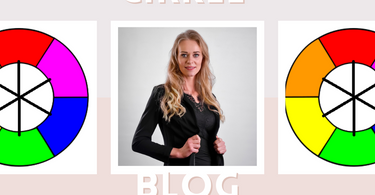

When we look at the circle and mix the discontinuous colors together, we get the color brown in every situation. But which pigment do you use for which skin color? In this blog we discuss this topic in detail.
Let's start at the beginning.
Primary colors:
- Yellow / blue / red.
These pigments cannot be made by mixing. Primary colors are the main colors of all existing pigments.
Secondary colors:
- Yellow + blue = green
- Blue + red = violet
- Red + yellow = orange
Complementary colors:
These are colors that face each other in the color circle.
Tertiary colors:
The tertiary colors are often dark. This is because the darker shades created after the initial mixing of the primary dominate when mixing.
Examples of tertiary colors include: dark orange, brown tones, blue-green, dark purple and olive green.

Help! Eyebrows turning red!
How to correct red eyebrows with PMU?
If the permanent make-up is applied too deeply or too superficially, it may turn red. Usually the small molecules are the culprit, they dissolve sooner than the large molecules of the red pigment. Normally you use blue and yellow to make red brown. This is of course not an option in the face.
For red eyebrows, use an Olive-colored pigment. There is a green glow in this. If you mix blue and yellow you also get the color green. The olive-colored pigment contains enough green pigments to correct red.
Red and green are opposites and make the color brown, which is a tertiary color.
In the hairdressing profession we sometimes have to deal with blonde hair that turns green after a dip in chlorinated water. Use the color red (for example ketchup) let it absorb and the green will be gone. If you are going to dye blonde hair brown, it must be pre-pigmented with red beforehand. If you do not do this, the hair will become 1e paint treatment and washing a few times greenish in color.
Purple/blue eyebrows
How to correct purple/blue eyebrows with PMU?
There is a chance that the treatment was done too deeply and/or the client has bled too much. If a cool pigment has been used and it becomes too deeply pigmented or blood is involved, the pigment color can mutate.
When the eyebrows turn blue/gray, use a warm correction color with orange/red to restore the color. If the eyebrows turn purple, use a color correction pigment with a lot of yellow in it to correct them.
Blue is the complementary color of orange (red – yellow)
When you add blue to orange you get a neutral muted brown variation. If there is too much yellow in the skin, the pigment can have an olive-green appearance; if the pigment comes into contact with blood, it can turn purple. This is how a tertiary color is formed again.
Finally, purple and yellow are left
Mix this in the correct ratio and you will get a yellowish brown color.
Mix these in the wrong ratio and the pigment will turn purple-gray.
The colors blue and red (warm and cold) provide the color purple in the skin.
Color correction
Working with color correction pigments such as yellow and red can alleviate a lot of suffering.
On warmer skin types, a pigment is used that has an orange undertone. The pigments for cooler skin types now contain a more yellow undertone, which means they fade more beautifully into the skin.
I hope my blog has helped you find the right pigments for the right skin types. What to pay attention to and how to prevent problems with different colors.
Love Kim

