


My client wants microblading—how do I determine if it’s the right choice?
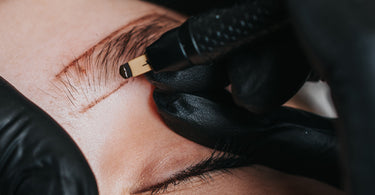
Powder brows are very popular right now and give your eyebrows a beautiful, made-up look. Microblading, on the other hand, looks more natural. With microblading, you use a blade to create hair strokes, and once healed, you’ve achieved a natural look. Microblading generally fades faster than powder brows. Another major difference is that powder brows can be done on any skin type, whereas microblading cannot.
It’s quite understandable that some women, especially those of a certain age, don’t want to go for powder brows but would prefer a microblading treatment. You can perform this immediately, but assessing the skin is absolutely essential. If the skin isn’t suitable for microblading, the result will be disappointing and fade more quickly. Once you have assessed
the skin
and informed the client, the choice is a conscious one, and you cannot be held liable for your work.
Assessing the skin for microblading
How do you assess whether the skin is suitable for microblading? Skin texture and age are important factors. People with dry skin and few pores are generally suitable for microblading. With oily skin, it’s a different story.
If you see shiny, oily skin, it’s wise to examine the skin closely. I assess the skin by looking at the pores in the eyebrow with a magnifying glass. Use an eyelash brush to sweep the hairs aside and examine the pore structure through the magnifying glass. Of course, everyone has pores, but are there a lot of them, and are they large? If so, microblading won’t turn out as desired.
With large and numerous pores in the skin, pigment placement will be more difficult because a lot of sebum and oil comes out of the pore structure. As a result, little pigment can be absorbed into the skin, and the microblading won’t take well.
You can also tell during the treatment itself whether it will be successful. Determine how many “passes” you want to do; after the first pass, you’ll already see if it’s absorbing well. For sensitive or mature skin, I often use different needle modules; in that case, I’ll use a finer needle. I’ll discuss this further in another blog post.
Discuss the options with your clients
Assess the skin during the consultation and thoroughly review the options and possibilities with the client so they also understand why you’re recommending microblading or not. In my salon, oily skin automatically qualifies for a powder brows treatment.
An alternative for clients who still prefer strokes is the 3D brows treatment. The pore structure of the eyebrow on the nose side is often shallow for everyone. With 3D brows, you apply a few strokes at the beginning of the eyebrow for a natural look and finish the rest of the eyebrow using the powder technique.
Replacing Old Microblading
Many clients come to us with old microblading. They want to have their eyebrows touched up with microblading, even though their skin isn’t suitable for it. Unfortunately, mistakes are made within the industry, and to correct them, the old permanent makeup often needs to be lasered off. After giving the skin 2 to 3 months to heal, I apply new powder brows. Although microblading fades quickly, some color will always remain. Before we treat the eyebrows again, that must first be lasered off so I can start on a clean “canvas” to create beautiful new brows.
Aftercare tips for microblading & powder brows
Clients don’t always know what the potential consequences might be if they choose microblading. It’s up to you, as a specialist, to assess that. Don’t be afraid to say no to clients—you want them to be satisfied and happy to come back to you, right?

Best regards, Elham!
